
Rethinking HACCP audits through a food pyramid lens
In food manufacturing environments, inefficiencies in internal audit often manifest in subtle ways.
HACCP and preventive controls are inherently risk-based. They are designed to focus attention where failure would matter most.
HACCP was never intended to treat all controls equally. It was designed to focus internal audit attention on areas where failure would have the greatest impact on food safety.
Recent discussions about re-prioritizing the food pyramid reflect broader shifts in consumer dietary expectations. This is driving frequent changes in formulations, suppliers, and production practices, and increasing the importance of keeping hazard analysis current and aligning internal audits.
Yet many food manufacturing audits drift in the opposite direction over time, becoming broader, heavier, and less focused, even as systems mature.
Hazard analysis becomes static
Hazard analyses are often reviewed as historical documents rather than as reflections of current operations. Incremental changes in ingredients, suppliers, or equipment don’t always translate into changes in audit emphasis.
Preventive controls receive uniform attention
Controls tied to very different hazard profiles are audited with the same depth, regardless of severity or likelihood.
Monitoring records dominate audit time
Large volumes of CCP (Critical Control Point) and preventive control records are reviewed without a clear link to what the audit is actually trying to learn about control effectiveness.
Corrective actions are treated as endpoints
Corrective actions are verified for completion, but their impact on future performance isn’t always revisited.
These patterns slowly shift internal audits away from prevention and toward routine verification.
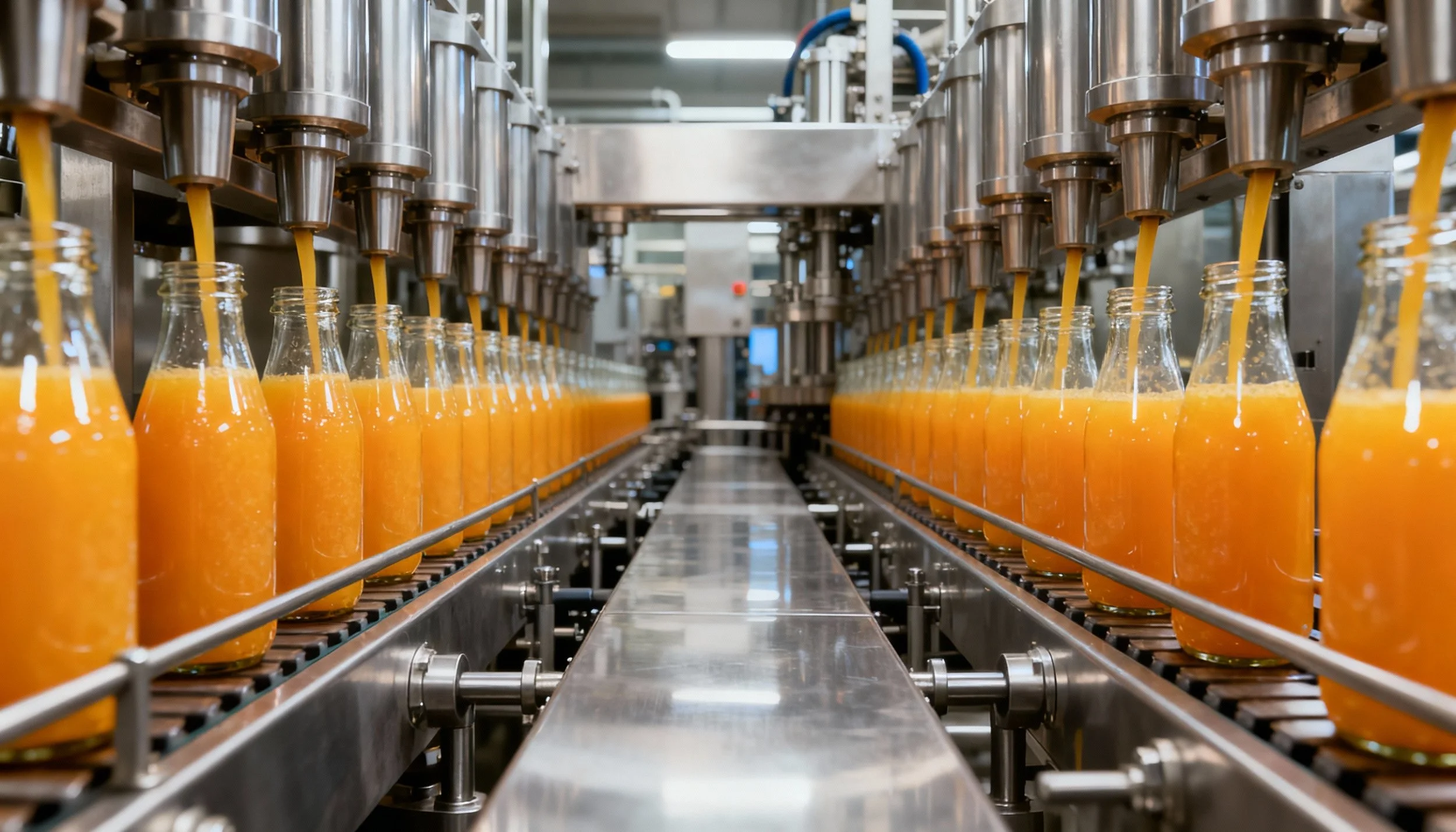
Juice bottled in a manufacturing plant is subject to HACCP regulations.
How effective HACCP audits stay focused
Food manufacturers that maintain audit efficiency tend to align audit structure with how hazards and controls actually behave over time.
They revisit hazard relevance before reviewing records
Audits should consider whether a hazard is still valid as defined and whether anything has changed that could affect its significance. This frames the rest of the audit.
They vary audit depth by hazard severity and control performance
Controls associated with high-severity hazards or recent deviations receive deeper review. Controls with stable performance receive confirmation-level review.
They evaluate monitoring records for insight, not volume
Instead of reviewing more records, auditors look for patterns: trends, exceptions, and signals that controls may be weakening or improving.
They reconnect corrective actions to future risk
Rather than closing corrective actions in isolation, audits examine whether those actions reduced the likelihood of recurrence.
Why this matters in food manufacturing
Food manufacturing systems change continuously:
Consumers demand transitions
Suppliers shift
Formulations evolve
Equipment is adjusted
Production schedules vary
Audits that don’t adapt to those changes lose relevance quickly.
Audits that adjust focus based on hazard behavior stay aligned with the purpose of HACCP itself: preventing food safety failures before they occur.
When HACCP and preventive controls audits are structured this way, manufacturers often see:
Less time spent reviewing low-risk controls
Faster audits with clearer conclusions
Fewer repeat deviations
Better alignment between audits and food safety outcomes
Efficiency improves not by doing less, but by focusing more precisely.
HACCP and preventive controls already provide a risk-based framework. Audit efficiency improves when audits are designed to follow that same logic.
— Read how GapCross can help streamline your HACCP audits. Contact us to learn more.
