
The records are ready. Procedures have been reviewed. People have prepared for interviews and an operational walk-through.
Audit day arrives, and the organization can present evidence that it has met the requirements. But how closely does that prepared view represent an ordinary working day?
An audit can provide valuable evidence and challenge assumptions. It cannot, by itself, establish that the organization recognizes missed work, changing conditions, and emerging problems as they occur.
When someone asks whether a process is under control today, do managers already know where attention is needed? Or do people have to search records, contact supervisors, and reconstruct what happened?
Demonstrating control on audit day and maintaining control every day require different kinds of awareness.
Process control is an ongoing activity
We began this series with a definition:
A process is under control when the organization knows what should be happening, can recognize meaningful differences between the expected and actual condition, and can respond before those differences become larger problems.
That capability must keep working as equipment, materials, people, workloads, and priorities change.
A completed procedure, successful audit, or resolved problem provides useful evidence. None guarantees that acceptable conditions will persist.
Production and control activities are work that must be planned and managed together. Observing, deciding, coordinating, verifying, and adapting are ongoing parts of operating the business.

Maintaining process control means knowing what's happening in daily operations—and recognizing when something needs attention.
Design daily work to maintain control
Throughout this series, we have explored the elements that make control practical:
Define expectations: required work, responsibility, timing, and acceptable results.
Make conditions visible: capture relevant observations, results, missed activities, and uncertainty.
Direct attention: notify responsible people when a meaningful difference warrants action.
Connect the response: establish ownership, provide relevant knowledge, and verify the result.
Adapt and learn: coordinate changed work and use experience to improve future performance.
These elements become more valuable when they work together, with process automation reducing the effort required to recognize differences, coordinate responses, and maintain reliable records.
A recorded result informs the next decision. A notification connects an unmet expectation to someone who can act. A response remains visible until its required outcome is established. Experience informs reviewed changes to the work and its controls.
This is how work design answers the question raised earlier in the series: How can the system recognize when reality begins moving away from the plan?
Recognition and response become part of how the work operates.
What does management need to know?
Consider the grinder example used throughout this series.
Can management see whether cleaning and verification are complete, whether any condition remains unresolved, and whether production can proceed?
If damage requires maintenance, the people responsible need to know what work can continue, what must wait, and what conditions must be met before production resumes. Findings and decisions would remain available and visible across departments and shifts.
Over time, repeated delays, difficult cleaning conditions, or repeated requests for help would provide a basis for improvement.
Management could see both the current operating condition and the additional work needed to maintain or restore control.
Continuous awareness must be practical
Continuous awareness does not require watching everything every second.
Information needs to be current enough for the decision it supports. Some conditions require immediate attention. Others can reasonably be reviewed daily, weekly, or when an event occurs.
The effort must also be justified.
People should not have to record the same information repeatedly, dismiss routine warnings, or seek approval where no useful judgment is added. Guidance should help them perform the work. Recording should support coordination and necessary evidence with as little disruption as practical.
A control system must earn the attention and effort it requires.
Audits and historical evidence still matter
Audits, inspections, investigations, and record reviews still serve important purposes.
The opportunity is to generate reliable evidence through daily execution while also using that information to support current decisions. An audit can then examine how controls operate, with less reliance on a separate effort to reconstruct the story.
Captured experience also supports learning. Human review and AI-assisted analysis can reveal recurring problems, emerging patterns, and opportunities for improvement. These insights can inform corrective and preventive action (CAPA), helping organizations investigate causes, implement changes, and verify whether those changes remain effective.
Where to begin
Choose one recurring management difficulty: missed verification, delayed handoffs, uncertain readiness, or repeated follow-up.
Ask what must be known, when it matters, who needs to act, and what establishes an acceptable result. Then consider how those activities can become part of everyday work, improving reliability while reducing the effort required to maintain control.
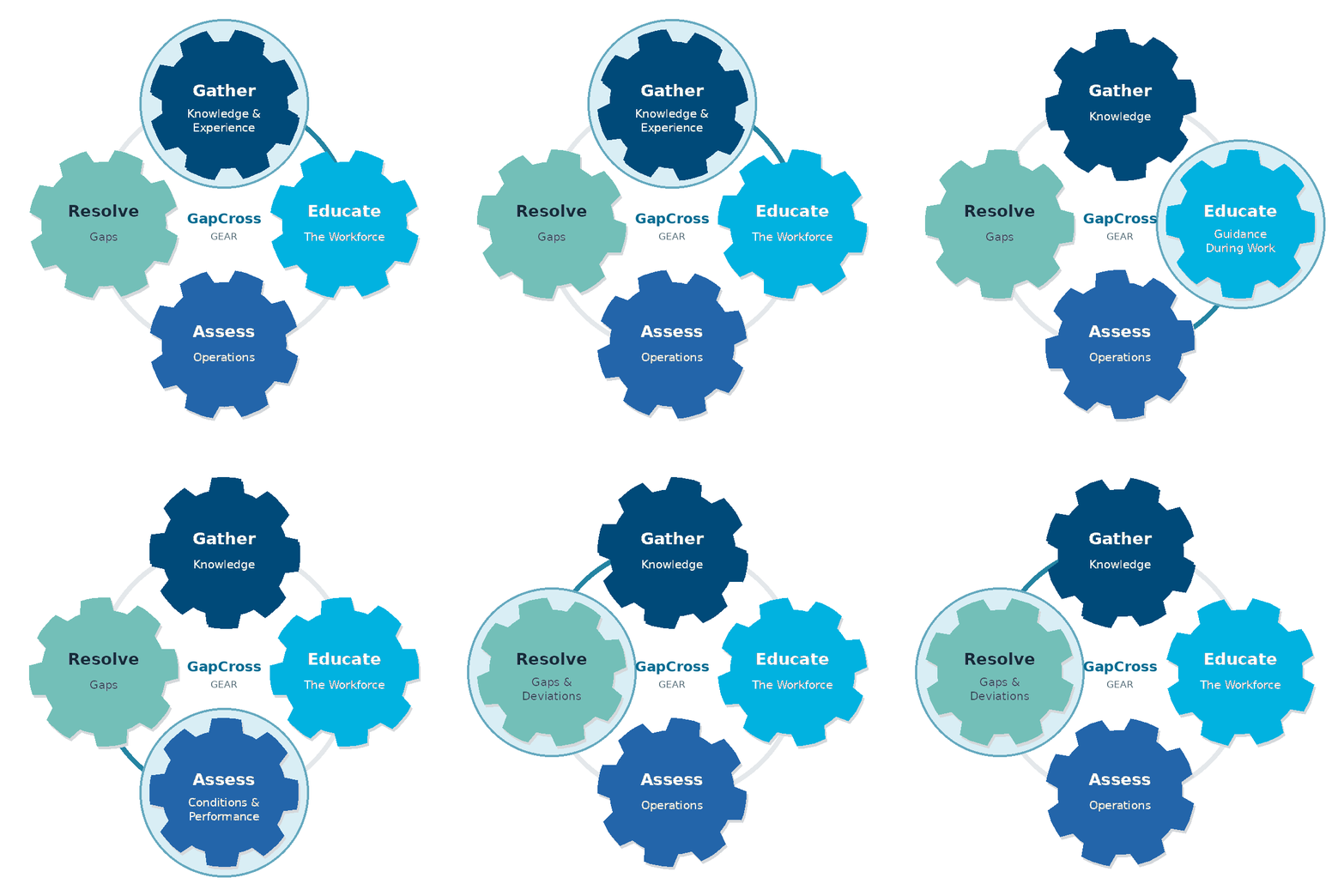
This is the approach behind GapCross GEAR: Gather business knowledge, Educate people as they work, Assess actual conditions against expectations, and Resolve gaps. By connecting these activities, organizations can maintain awareness of current conditions, coordinate responses, and generate reliable evidence through daily operations.
If your organization is looking for a more practical way to maintain control, improve quality, and reduce administrative effort, let’s talk.
Control is not something an organization has. It is something an organization continuously does.
