
Hazard vs. risk: Why confusing them leads to poor decisions
Series: Words Matter
How language shapes quality management, audits, and standards

One of the most common misunderstandings in risk management is treating hazards and risks as the same thing.
They aren't.
A hazard is something with the potential to cause harm.
Risk considers the likelihood and consequences of that harm occurring under specific conditions.
Before discussing hazards and risk assessment design, here is a simple example that illustrates the difference.
A table saw is a hazard.
Walking past a table saw in a woodworking shop presents very little risk.
Using that same table saw with the appropriate guards installed, while wearing the required eye and hearing protection, and following established operating procedures presents a different level of risk.
Now imagine someone using that same table saw without a blade guard, reaching over the blade, without eye protection, while another person is standing within range of flying debris.
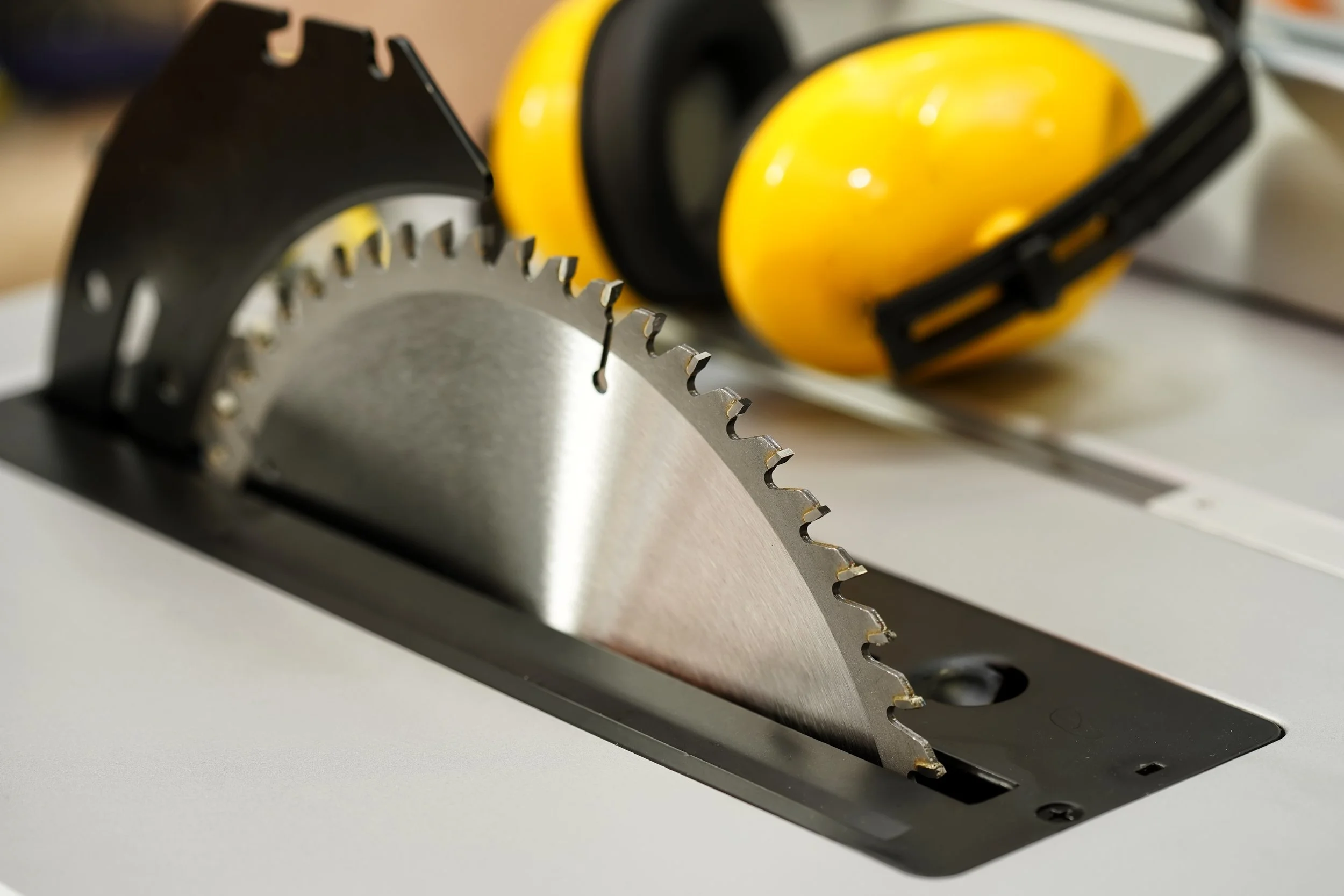
The hazard doesn't change. The risk does. Effective risk assessments evaluate the controls, training, and conditions—not just the presence of the hazard.
The hazard stays the same. The risk doesn't.
The hazard hasn't changed.
The risk has.
That's why effective risk management is about much more than identifying hazards.
It is about understanding the circumstances that increase or reduce risk and implementing controls that make the activity acceptable.
The same principle applies during assessments.
If an assessment simply asks:
"Is there a table saw?"
The answer provides very little value beyond triggering risk questions.
The assessment should ask additional questions, such as:
Are appropriate safeguards installed?
Are operators properly trained?
Is the required personal protective equipment being used?
Are safe operating procedures available and followed?
Is the equipment maintained and inspected?
Those questions evaluate how the hazard is controlled, rather than merely confirming that it exists.
This distinction becomes even more important when assessing quality management systems.
Many requirements identify areas that could pose risks to quality, safety, compliance, operations, or the company's reputation.
The assessment should not stop at identifying potential hazards.
It should evaluate whether effective controls have been implemented and whether those controls are working as intended.
This is one reason risk-based thinking has become such an important part of modern quality management systems.
The goal isn't to eliminate every hazard.
That would be impossible.
The goal is to understand risk well enough to make informed decisions and implement appropriate controls.
Lessons for designing better assessment programs
Good assessments don't simply identify conditions.
They evaluate how those conditions are managed.
Questions that focus only on the existence of a hazard often produce little insight.
Questions that evaluate planning, implementation, monitoring, training, maintenance, and continual improvement provide a much clearer picture of organizational performance.
As assessment programs mature, organizations often discover better ways to evaluate risk. Clarifying a question, adding a tip, or including a reference can significantly improve consistency without changing the underlying requirement.
Just as standards and organizations improve over time, assessment programs should continue to evolve as experience is gained.
After all, identifying hazards is only the beginning. Helping organizations and their staff understand and manage risk is where the real value lies.
How does your organization reinforce the distinction between hazards and risks? Share your experiences in the comments.
About the author
Ed Nodland has more than 30 years of experience in quality systems, auditing, standards development, software development, and risk management. He is the founder of GapCross.
